RUSSIAN LESSONS
with native speaker!
⭐ Friendly and gentle teacher ⭐
or send me a message: my.eto.mir@gmail.com
You can take a Russian language test in advance. (It’s free.) Click >>>
About me
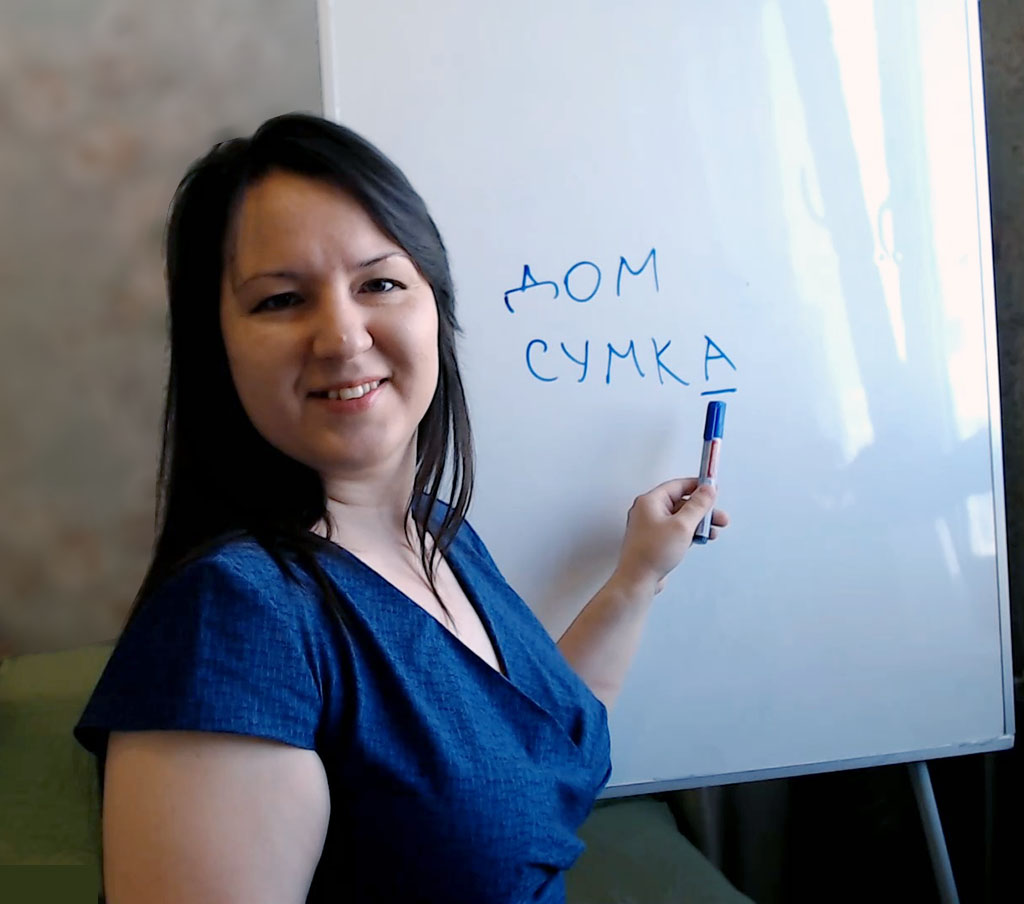
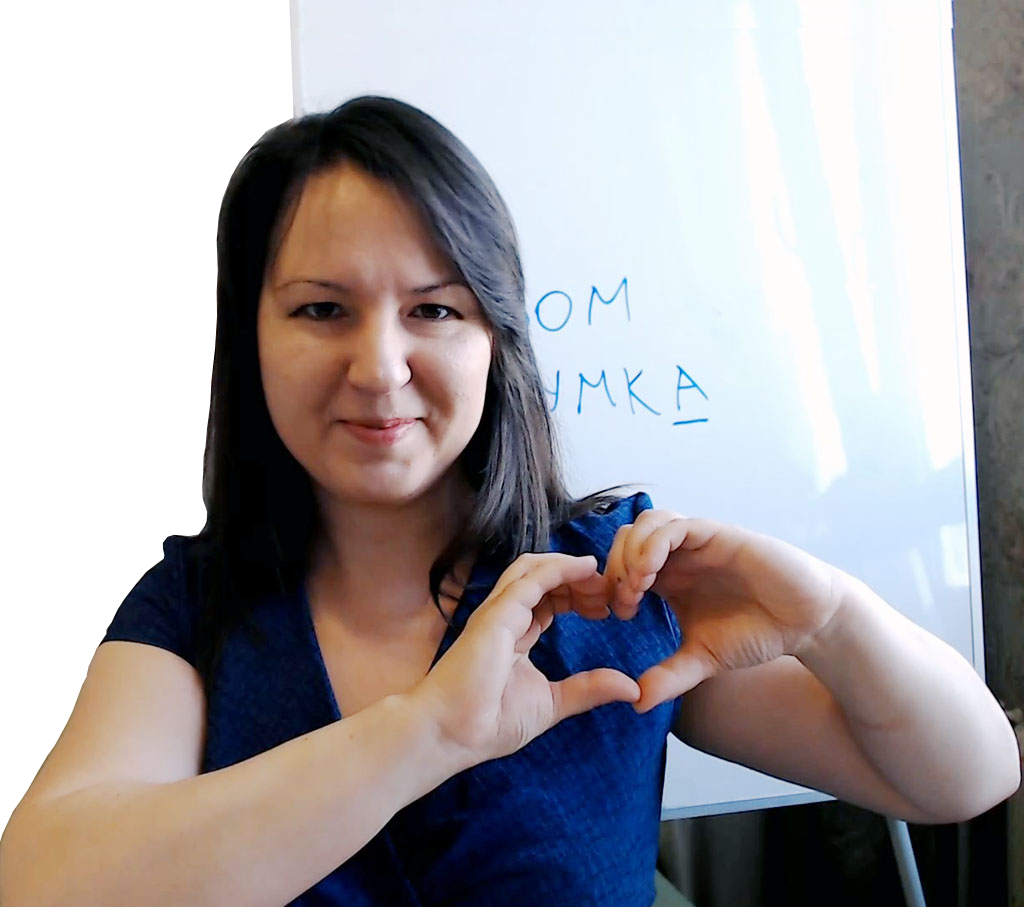
Hello! My name is Olga.
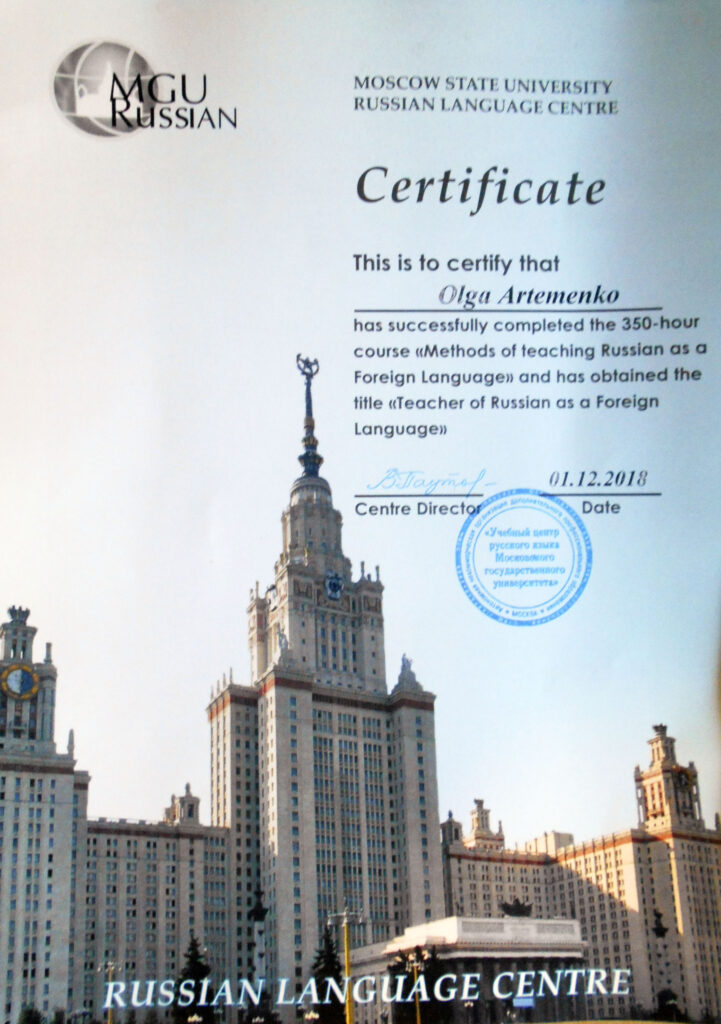
I am a certified teacherof Russian as a Foreign Language (see certificate). I’m russian native speaker, live in Russian, in the Far East.
I’m inviting you to online Russian lessons.
My teaching experience is over 4 years.
I’m using communicative language teaching.
For my classes use textbooks, texts, audio and video materials. We learn grammar, phonetics, writing, reading, listening, and, of course, we are speaking.
The study of the Russian language is not a very easy action, but very interesting.
I do my best to make the lessons simple, understandable and interesting.
And I do one’s best to create friendly atmosphere during the lesson where you will feel good, comfortable and safe. I’m looking forward to meeting you!
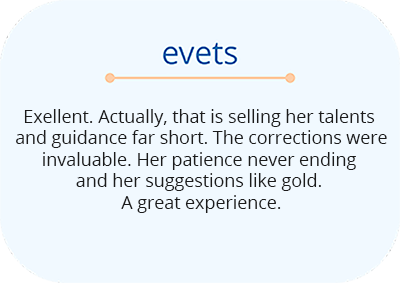
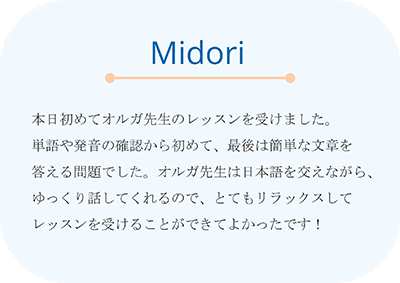
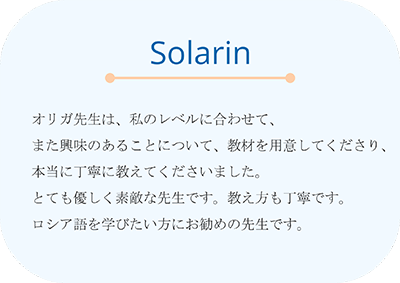
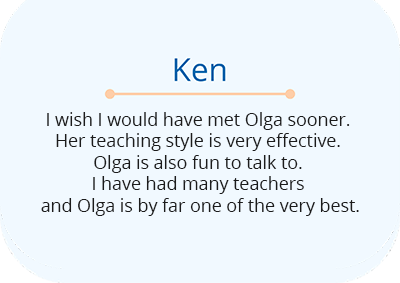
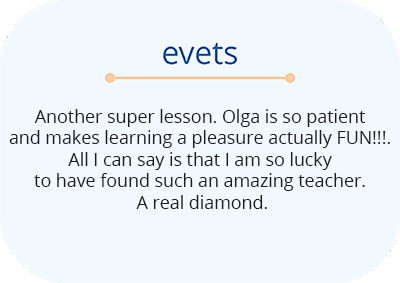
Here is what my wonderful students say about our lessons: (see more >>>)
Russian lessons
Private lessons:
Trial lesson: FREE (30 min)
Lesson 60 min: 2000 rubles
Lesson 30 min: 1200 rubles
Lesson 45 min: 1600 rubles
Lesson 90 min: 2800 rubles
(package of 4 lessons – 5% discount)
Group lessons (minimum 2 people):
1500 rubles/60 min.
Book lesson
FAQ
This is what people who want to learn Russian often ask me.
It all depends on the individual. Some people learn faster, others more slowly. For example, many factors matter:
— how much your native language differs from Russian (for a Slavic language speaker it is much easier than for a Japanese speaker),
— whether you have a good memory or not,
— how well you understand spoken language,
— whether your brain is tired or rested,
— whether you have strong stress that blocks new information or not.
And there are many other reasons that affect your learning speed.
Everyone learns at their own pace.
On average, it is considered that reaching the first level (A1) requires about 80–120 hours of study.
A1 level ≈ 80–120 hours
A2 level ≈ A1 + 180–200 hours
B1 level ≈ A2 + 160–180 hours
B2 level ≈ B1 + 380–720 hours
C1 level ≈ B2 + 280 hours
C2 level ≈ C1 + 180 hours
Russian is not an easy language. But it is very interesting. I always tell my students: “Treat learning the language as an exciting adventure. Sometimes you will walk slowly by foot, sometimes you will drive fast by car, but in any case you will enjoy beautiful nature, talk with interesting people, do interesting things and discover something new and unusual.” I try to make your language learning an exciting journey so that you truly enjoy the process itself.
The best option is to have lessons 2–3 times a week for 45–60 minutes.
One lesson per week will allow you to maintain your knowledge of the language. However, you should understand that progress will be slower.
I can also offer 30-minute lessons for very busy people who find it difficult to find even one hour a week for a lesson, or for those who, due to health reasons, find it hard to maintain concentration for a long time.
The trial lesson is a short demonstration of a regular lesson. I teach you Russian, and you see whether this teaching style suits you or not. Bring a notebook and a pen to the lesson! 🙂
By the way, before lesson you may take the test and know your level (approximately). Test shows only grammar results. And I will able to know your other skills (speaking, listening) during trial lesson. Take the test here >>
In class I use Russian as much as possible. The lessons are built so that you understand everything without translation. This is a special method. However, if something is still unclear, I can explain in English, in Japanese, or use an online translator.
Russian is as difficult as any other foreign language. Whether it’s worth starting is more of a psychological question than a linguistic one. You either allow yourself to enjoy and do what your soul asks for, or you forbid it. And it doesn’t matter what we’re talking about — learning a foreign language, dancing, singing, entering university, starting a family, etc.
Of course, with age, many people notice that cognitive abilities slow down a bit and it takes more time to memorize new words than when you were, say, 20. However, learning a foreign language has a very positive effect on the brain and helps it stay active longer. It is definitely a good investment in your health. The most important thing is that you like the language you are studying and take pleasure in process.
This is not a problem at all! I always have questions ready for you, and I prepare materials in advance. We can watch a film, work with a song, read a text and discuss it, etc. You will always have a topic for conversation, I will always have questions for you, and you will always have grammatical patterns to help you build sentences correctly. And if you can’t express something, I will always help you.
In Russia people may notice your accent. But they do so only because they are interested in foreigners. They will hear the accent, realize you are a foreigner, and start asking: where you are from, where you studied Russian, why you are learning it, why you love Russia, and so on.
There is only one rule in lessons of foreign language: your speech should be understandable. If you pronounce something very unclearly, we will work on it and correct the sounds.
Russians are very friendly and responsive. Many will be happy to help you even if they don’t understand everything. No one will laugh at you.
Besides, Russian lessons are your safe training space. Here you can practice speaking and make as many mistakes as you need. Your native-speaker teacher will always help you notice and correct the mistakes. It only feels scary in your head. In reality, everything is comfortable, friendly, and fun.
There is no need to be afraid. You have a very patient and kind teacher. Everyone makes mistakes — me, you, and everyone else. A mistake is valuable experience. The more mistakes you make and correct, the more experienced you become. Don’t be afraid of mistakes — there is no scolding for them in my lessons.
No. I only teach adults. Children’s brains and psychology work differently from adults. They require a different program. I recommend you look for a teacher who specializes in teaching children.